If you’ve ever stood in a workshop, staring at a stack of metal sheets and a pile of dimensional lumber, wondering how to stick those two very different materials together, you’re not alone. I get this question all the time, both from weekend DIYers dragging half-finished projects into our trade counter and from plant managers checking specs for high-volume manufacturing lines. As a supplier of solvent-based spray adhesives, I’m not here to give vague answers—so let’s break this down with the science, the real-world use cases, and the hard truths about what works (and what doesn’t) when bonding metal to wood. Solvent-based Spray Adhesive
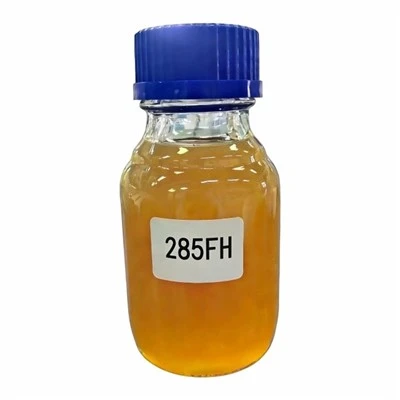
First, let’s get one thing straight: metal and wood are wildly different substrates, both in their physical makeup and how they interact with adhesive. Metal is dense, non-porous, and often has a smooth or sometimes oxidized surface, while wood is porous, hygroscopic (meaning it absorbs and releases moisture with humidity and temperature), and has a rough, grainy structure at a microscopic level. That mismatch is why so many adhesives fail here—they either can’t grip the smooth metal surface, they can’t penetrate wood’s pores to get a mechanical lock, or they break down when exposed to the slight movement or moisture that wood goes through.
Solvent-based spray adhesives have specific properties that make them uniquely suited for this job, but not all solvent-based formulas are equal. Let’s start with how these adhesives work. When you spray them, the solvent carrier (usually a blend of acetone, toluene, or heptane, depending on the formula) evaporates quickly, leaving behind a thin, uniform layer of polymer resin. That resin is the actual bonding agent, and the key is matching that resin’s chemistry to both surfaces. For metal, we use resins that have polar functional groups—think polyurethanes, epoxies (wait, no, not all epoxies—wait, let’s correct that: for metal bonding, we often use acrylic or modified rubber-based resins, specifically neoprene or styrene-butadiene, because they adhere well to non-porous surfaces that lack the reactive sites metal has. Wood, on the other hand, has hydroxyl groups in its cellulose fibers, so the resin also needs to have groups that can form secondary bonds (hydrogen bonds) with those hydroxyls, plus enough flexibility to stretch slightly as wood moves without cracking.
Let’s talk about real-world applications first, because that’s where this matters. I recently worked with a custom cabinet maker who was building out metal shelving inserts for a high-end kitchen line. He’d tried every glue under the sun: hot glue (failed immediately when heavy pans were set on it), PVA wood glue (no grip on the smooth steel shelf brackets), even a two-part epoxy that smelled like chemicals and set too fast to work with spray application. When he switched to our general-purpose solvent-based spray adhesive, designed for dissimilar substrates, he told me it cut his assembly time in half and the bonds have held for three years now—no peeling, no separation, even in the humid Florida climate where his cabinets are installed. That’s a key point: solvent-based spray adhesives for metal-to-wood bonding are different from the ones you use for, say, gluing cardboard to foam. Our formula is formulated with a higher molecular weight resin, so it forms a tough, flexible film that can handle the thermal expansion mismatch between metal and wood. Metal expands at a rate of around 12 x 10^-6 per °C, while wood expands tangentially (across the grain) at around 3 x 10^-6 per °C—so when temperatures shift, the two materials move at different rates. A rigid adhesive like regular PVA or a brittle epoxy will crack under that stress, but our flexible resin can bend and stretch slightly to absorb that movement, keeping the bond intact.
Now, what are the conditions where this works best, and where it might not? First, surface preparation is non-negotiable, and that’s a step most DIYers skip. For wood, you want to make sure it’s clean, dry, and free of any wax, finish, or sawdust. If the wood is freshly cut, let it acclimate to the environment for at least 72 hours so its moisture content is stable—wood with more than 12% moisture content will cause the adhesive to fail over time as the wood shrinks or swells. For metal, you need to remove any rust, oil, or mill scale. A quick wipe with isopropyl alcohol works for light rust or fingerprints, but for heavily oxidized or oily metal (like sheet steel straight from a roll), a light sandblasting or a wipe with a solvent degreaser is necessary. The key here is creating a slightly rough, micro-porous surface on the metal—this lets the adhesive’s resin penetrate into those tiny valleys, creating mechanical grip, similar to how the adhesive grabs wood’s pores.
Application technique matters too. Solvent-based spray adhesives work best when applied in thin, uniform coats to both surfaces. Don’t overspray—thick coats take too long to dry and can form a soft, weak layer that peels. Apply one light coat to metal, one light coat to wood, let the solvent flash off (usually 2 to 5 minutes, depending on temperature and humidity—you want the adhesive to feel tacky to the touch, not wet), then press the two surfaces together firmly. The pressure helps squeeze out any air bubbles between the layers, so the resin can make full contact with both substrates. For large surfaces, a roller or a clamping system can help, but for small parts, hand pressure works fine.
Now, let’s address the caveats, because no adhesive is perfect. If your application is going to be exposed to extreme heat (over 150°F, which is common in things like oven components or outdoor metal-to-wood structures in direct sun), a general-purpose solvent-based spray adhesive might not hold up. Our high-temperature formula is designed for that, but it’s a different mix. Also, if you’re bonding very thin metal (like aluminum foil or extremely light gauge steel) to wood, the flexible resin might cause the thin metal to wrinkle, so a stiffer, structural solvent-based adhesive would be better there. Another point: solvent-based adhesives do have a strong odor during application, so you need to work in a well-ventilated area, or use proper respiratory protection if you’re applying large volumes. That’s not a safety hack—it’s a requirement, and one we always emphasize to our customers.
I hear a lot of people ask, “Why not use a two-part epoxy for metal-to-wood?” Epoxies are strong, but they have downsides when compared to solvent-based spray adhesives. Epoxies have a very long cure time (sometimes 24 hours for full strength), whereas solvent-based spray adhesives are fully cured in 24 hours or less, so you can handle the part right after pressing. Epoxies are also rigid, so they don’t handle the thermal and moisture movement between metal and wood as well as flexible solvent-based resins do. And for high-volume manufacturing, spray application is way faster than mixing and applying epoxy by hand—you can coat an entire 4×8 foot metal panel and wood sheet in 5 minutes, versus 30 minutes or more for epoxy. That’s why our solvent-based spray adhesives are popular in industries like furniture manufacturing, interior construction, and even automotive interior parts (think metal trim pieces bonded to wood dashboard panels).
Let’s talk about some common mistakes I’ve seen over the years. Last year, a customer who makes custom acoustic panels tried to use our general-purpose solvent-based adhesive to bond steel mesh to wood frames. He skipped the metal preparation step, just wiped it down with a dry cloth, and the bond failed in a month when the panels were hung. When he came back to us, he followed our prep instructions: sandblasted the mesh, cleaned it with degreaser, acclimated the wood, and applied thin coats. The panels have been in place for 18 months, no issues. Another common mistake is applying the adhesive to only one surface. You need to apply it to both metal and wood to get a strong bond—when the solvent evaporates from both sides, the resin layers fuse together, creating a single, continuous bond line. If you only apply it to metal, the wood’s porous surface will suck the solvent out too fast, leaving a dry, weak resin layer that doesn’t grip.
What about load-bearing applications? If you’re using this for things like a shelf that will hold heavy books, our solvent-based spray adhesive works as long as the bond area is sufficient. A 6×12 inch bond area will hold hundreds of pounds, because the load is distributed across the entire surface, not just a few small points. If you’re trying to bond a 1×1 inch metal bracket to a wood beam to support a 500-pound load, that’s a different story—you’d need a structural epoxy or a mechanical fastener, not spray adhesive. Spray adhesive is great for high-strength, permanent bonds, but it’s not a replacement for bolts or screws when dealing with extreme loads.
Now, let’s get into the nitty-gritty of the science behind why solvent-based spray adhesives work here, because it’s not just “they stick.” The polar resins in our solvent-based formulas have dipole moments that interact with both the polar hydroxyl groups on wood cellulose and the polar oxide layer on metal surfaces (most metals have a thin oxide layer on their surface, even if it looks smooth). When the adhesive is applied as a thin layer, it forms Van der Waals forces and hydrogen bonds with both substrates, plus the mechanical grip from the resin penetrating the microscopic pores of wood and the micro-roughness of properly prepared metal. That combination of mechanical and chemical bonding is what makes it stronger than adhesives that only rely on one type of bond. Water-based adhesives, by contrast, struggle with this because they don’t form the same strong polar bonds with metal, and the water can cause metal to corrode over time, weakening the bond. Hot melt adhesives are too rigid and don’t penetrate wood’s pores well, so they peel off easily.
I know a lot of people are wary of solvent-based products, thanks to old stereotypes about VOCs and toxicity. But modern solvent-based spray adhesives, like the ones we manufacture, have low-VOC formulations that meet global environmental standards (like EPA 6H, CARB, and EU REACH requirements). We’ve invested in refining our solvent blends to reduce volatile emissions while keeping the bonding strength high, so they’re safe for use in well-ventilated workspaces, and many of our customers use them in commercial manufacturing facilities without issues. The key is following the application safety guidelines—working in a space with exhaust ventilation, wearing nitrile gloves, and avoiding open flames, since the solvents are flammable.
So, to circle back to the original question: Can you use a solvent-based spray adhesive to bond metal to wood? The short answer is yes, but only if you choose the right formula, prepare the surfaces correctly, and apply it the right way. It’s not a one-size-fits-all solution, but for 90% of the common metal-to-wood applications people have—cabinet parts, acoustic panels, shelving, interior trim, custom furniture—it’s a faster, more cost-effective, and more durable option than other adhesives. If your project involves extreme heat, extremely thin metal, or extreme load-bearing, we can work with you to adjust the formula or recommend a different product line, but for most of the projects we see day-to-day, this is a solid, science-backed solution.
If you’re working on a metal-to-wood project and want to test a sample, or you need a custom formula tailored to your specific substrate combination and application conditions, we’re here to help. We’ve worked with hundreds of manufacturers and craftspeople to refine bonding solutions for dissimilar materials, and we can help you get the right setup for your project, no matter how big or small. Reach out to our team to discuss your needs, order a trial batch, or get technical support for your application.
Nylon Primer References:
- ASTM D3125, Standard Test Method for Effect of Temperature on Adhesion of Pressure-Sensitive Tapes
- Wood Handbook: Wood as an Engineering Material, USDA Forest Service, 2010
- Metal Finishing Guidebook, Society of Manufacturing Engineers, 2022
- Solvent-Based Adhesives: Chemistry and Applications, Hanser Publishers, 2019
Guangdong Yrbest High Polymer Technology Co., Ltd.
Guangdong Yrbest High Polymer Technology Co., Ltd. is one of the most professional solvent-based spray adhesive manufacturers and suppliers in China, featured by quality products and good price. Please rest assured to buy bulk advanced solvent-based spray adhesive from our factory. Contact us for quotation and free sample.
Address: Room 1701, No. 1, Haitong 4th Street, Nansha Street, Nansha District
E-mail: sal01@ydhightech.com
WebSite: https://www.ydhightech.com/
