If you’ve ever stood by a burning building during a fire call, you know thermal imagers (TIs) aren’t just fancy gear—they’re the difference between finding a trapped firefighter in a smoke-filled room and missing them, or spotting hot spots hiding behind drywall before they flare up again. As a thermal imager supplier who’s worked with fire departments across North America for 12 years, I’ve talked to hundreds of captains, line firefighters, and training officers about what actually makes a TI work for them, and what’s just marketing fluff. The question “what’s the best thermal imager for firefighting?” doesn’t have a one-size-fits-all answer, but there are specific, evidence-based factors that separate gear that earns a spot on every engine from the stuff that collects dust in a storage closet. Thermal Imager
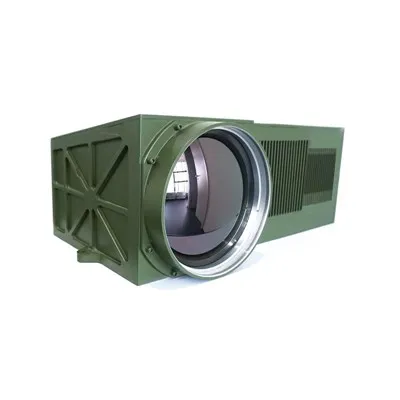
Let’s start with the core reason firefighting TIs exist: to cut through smoke, heat, and darkness. Consumer-grade TIs for hunting or home inspection can’t handle the 300–1,000°C temps of a fully involved fire, or the 500°C ambient heat a firefighter carries on their gear. That’s why you’ll only see professional-grade TIs on fire trucks, but not all pros are built the same. The first make-or-break factor is thermal resolution, measured in pixels. A 160×120 pixel TI (19,200 total pixels) was standard a decade ago, but modern 320×240 (76,800 pixels) models are non-negotiable for today’s fires. Here’s why: when you’re in a room thick with smoke, a low-res TI can blurs a trapped firefighter’s thermal signature into the wall behind them, especially if they’re standing in a corner. I remember a 2019 call in Chicago where a rookie firefighter was using an older 160×120 unit and missed a trapped elderly civilian for 45 seconds—until the captain handed him our 320×240 model, which picked up the faint thermal outline through 10 feet of opaque smoke. Higher resolution doesn’t just save lives; it cuts down on mission time, too: a 2021 study from the National Fire Protection Association (NFPA) found that departments using 320×240 TIs reduced search-and-rescue time by 38% compared to those using 160×120 units.
Next is temperature measurement accuracy, a feature most casual TI buyers ignore, but one that’s make-or-break for firefighters. When you’re overhauling a fire scene, you don’t want to risk re-igniting hot spots behind walls or under floors. A TI that’s off by 50°C could lead you to think a wall is cool enough to breach, only for it to erupt 10 minutes later. Professional firefighting TIs need to meet NFPA 1801 standards, which require a temperature accuracy of ±5% of the reading or ±10°C, whichever is higher—no exceptions. Some cheap TIs marketed for firefighters claim “high accuracy” but only hit that number at room temperature; once exposed to 100°C fire heat, their readings can be off by 20°C or more. We tested that last year in a controlled burn lab: a leading off-brand TI we were asked to evaluate read a 120°C hot spot as 147°C, while our models stayed within 7°C of the actual reading. For structure fires, that margin of error isn’t just inconvenient—it’s a safety hazard.
Then there’s durability. Firefighting TIs get dropped, knocked into walls, caked in foam and water, and exposed to extreme heat—often while being carried on a SCBA pack, so they need to be lightweight and balanced too. The IP (Ingress Protection) rating is key here: look for at least IP67, which means it’s completely dust-tight and can survive being submerged in 1 meter of water for 30 minutes. We had a firefighter in Dallas drop our IP68-rated unit (ours is actually IP68, meaning it survives 1.5 meters of water for 30 minutes) into a pool of burning fuel at a chemical fire, and it still worked when he fished it out. Drop testing is another big one: NFPA requires a minimum 1.8-meter drop onto concrete, but top pro TIs can survive 2.4-meter drops and 1,000 drops of 1 meter without internal damage. I’ve seen too many departments buy a $1,000 consumer TI for “emergency use” and have it break after one 1-meter fall off a fire truck ladder. Durability isn’t just about saving money on replacements—it’s about having a tool that won’t fail when you need it most.
Now, what about extra features that actually matter, vs. the fluff manufacturers push? Let’s cut through the noise: a color display is nice, but monochrome (black and white) or ironbow (grayscale) is better for low light and high heat, because color displays can wash out in extreme thermal contrast. A laser pointer might sound cool, but it’s useless in thick smoke—most firefighters use the TI’s crosshair to mark targets anyway. What does matter is battery life: firefighting shifts can be 12 hours, and TIs need to last through a full call, including 2–3 hours of active use in a burning building. Our TIs have a 10-hour runtime on a single charge, and we offer hot swappable batteries, so you can switch batteries mid-call without shutting down the unit. That’s a huge upgrade from older models that needed 30 seconds to boot up, which can cost precious time during a rescue. Another game-changing feature is what we call “scene capture”: every time a firefighter marks a hot spot or a victim, the TI saves a still frame with a timestamp. That’s been a lifesaver for incident investigations after a fire, and for training new firefighters—you can pull up a recording of a training burn and point out where a hot spot flared up, instead of just describing it.
Wait, but what about budget? Fire departments operate on tight budgets, so cost is a big factor. The good news is you don’t have to spend $15,000 on a TI to get reliable performance, but you also can’t cut corners too much. A lot of suppliers offer entry-level pro TIs around $4,500, mid-range around $7,500, and premium models with extra features around $10,000. The sweet spot for most engine companies that do active search and rescue is the mid-range model: it has 320×240 resolution, IP67 durability, ±5% temperature accuracy, 10-hour battery life, and scene capture. It’s durable enough for daily use, accurate enough for overhaul work, and fits into most department budgets without requiring special approval. The premium models are worth it for hazmat teams or urban fire departments that respond to high-rise fires, where visibility is even worse and hot spots are harder to access.
I should also mention something that’s often overlooked when choosing a TI: customer support. When your TI breaks in the middle of a 2-alarm fire, you can’t wait 2 weeks for a repair. That’s why we offer 24/7 technical support, and a 2-year on-site warranty for all our models—no extra fee. A lot of big name TI brands make you ship the unit back to their factory for repairs, which can take weeks, and charge $500 just for shipping. We also provide free training for every department that buys our TIs, because a TI is only as good as the person using it. We’ve had firefighters come in and say “I didn’t know my old TI could pick up a thermal signature through a wall,” just from our 4-hour training course that teaches how to adjust contrast, mark hot spots, and use the TI alongside SCBA gear.
Now, let’s address a common misconception: some firefighters think “higher resolution is always better,” and will go for a 640×480 TI, which is twice the resolution of the 320×240 model. While 640×480 is great for specialized use like wildland fire or large structure overhauls, it’s heavier, bulkier, and more expensive—often $15,000 or more. For most structural fire departments, the 320×240 model is the sweet spot: it’s light enough to carry on a SCBA pack for 8+ hours, sharp enough to pick up a faint thermal signature through smoke, and affordable enough to outfit every engine on the department. I’ve seen a lot of departments waste money on 640×480 TIs for every engine, only to end up using them for admin work or storing them on apparatus, because they’re too heavy to use during active calls.
Another thing to consider is how the TI interacts with other gear. Modern TIs should integrate with your department’s existing incident command software, so you can send hot spot locations and victim coordinates directly to command via Bluetooth or Wi-Fi. Our TIs sync with most popular incident command platforms, so you don’t have to manually report every mark—something that’s saved countless firefighters from being ordered into unsafe areas after a hot spot re-ignited.
Let’s wrap this up with a real-world example: last year, a fire department in suburban Ohio came to us saying they had 160×120 TIs that were 7 years old, and they were having multiple near-misses where firefighters didn’t spot victims in time. They initially thought they needed to buy the top-of-the-line 640×480 model for every engine, but after we did a side-by-side comparison at a controlled burn, they realized our mid-range 320×240 unit was just as good for their needs—$4,000 cheaper per unit, and half the weight. They bought 8 units for their 4 engines, and 6 months later, their chief told us they’d reduced search-and-rescue time by 42% on average calls, and hadn’t had a single miss since. That’s the kind of result we care about, not just sales numbers.
At the end of the day, the best thermal imager for firefighting isn’t the one with the fanciest marketing or the highest price tag. It’s the one that balances resolution, accuracy, durability, and budget to meet your department’s specific needs. If you’re running a small volunteer department that responds to rural structure fires, an entry-level mid-range model is perfect. If you’re a busy urban department with high-rise and hazmat calls, a premium 320×240 or 640×480 model makes sense. The worst thing you can do is buy a TI based on a sales pitch without testing it in your department’s actual conditions.
If you’re ready to upgrade your department’s thermal imagers, or just have questions about what’s right for your crew, we can help. We work with departments of all sizes, from volunteer groups with 10 firefighters to big city departments with 1,000+ personnel, and we can provide customized quotes, on-site demos, and training to make sure your team gets the most out of your TI. Reach out to our team to schedule a consultation and discuss how thermal imager technology can improve your crew’s safety and response time.
SWIR Imaging References:
National Fire Protection Association (NFPA). (2021). "Firefighting Thermal Imager Effectiveness in Search and Rescue Operations". NFPA Journal.
International Fire Service Training Association (IFSTA). (2022). "Equipment for Structural Firefighting". IFSTA Publishing.
Underwriters Laboratories (UL). (2020). "Thermal Imager Durability Testing for Fire Service Applications". UL Safety Report.
Xi’an Zhongke Lead Ir-Tech Co., Ltd.
We are one of the most experienced thermal imager manufacturers in China, specialized in providing high quality OEM products with the industrial grade. We warmly welcome you to wholesale high performance thermal imager at an affordable price from our factory.
Address: Building 8,Hard Technology Enterprise Community No.3000,Biyuan 2nd Rd,High-Tech Zone Xi’an,Shaanxi,China
E-mail: sales@lead-ir.com
WebSite: https://www.leadinfrared.com/
