Hey folks, let’s cut to the chase: if you’re in industrial inspection, you’ve probably stared at your thermal cameras and your regular visible-light cameras, right? Wondering why some parts slip through the cracks, or why some processes look totally invisible on standard gear. That’s where I come in— I’ve spent the last 8 years selling SWIR 640 cameras, and for probably 90% of the industrial inspection jobs our customers come to us with, this little workhorse delivers way more than anyone expects. Let’s break this down like we’re chatting over coffee, no jargon overload, just real-world stuff we see every single day. SWIR 640

First off, for anyone new to the SWIR game: SWIR stands for Short-Wave Infrared, and our 640-series means the sensor has a 640×512 pixel resolution. It’s not thermal (that’s long-wave IR, for the uninitiated) and it’s not visible light either— it sits in that sweet spot between 1,000 and 2,500 nanometers, where light doesn’t just bounce off surfaces, it penetrates things visible cameras can’t. Let’s start with the most common industrial headaches: material flaws that hide under coatings or layers. I had a customer last month making composite aircraft parts— carbon fiber wrapped in a thin epoxy coat. Their old visible camera would pick up scratches on the epoxy, but the real problem was tiny voids in the carbon fiber that showed up after the epoxy cured, which would make the whole part fail inspection later. They tried ultrasound, but it was slow and messed with the epoxy’s finish. Switched to a SWIR 640, and boom— those voids show up as dark spots instantly, no prep, no waiting. The techs there now run every part in 2 seconds flat, and they’ve cut part failure rates by 40% this quarter. That’s not a sales pitch, that’s what I heard last week.
Another big one: weld inspection, especially for dissimilar metals. A lot of manufacturers weld aluminum to steel, or copper to nickel, and standard thermal cameras struggle here because different metals have wonky emissivity— that’s the big word for how a surface emits light in the IR world. You have to calibrate like crazy, and even then you get fuzzy readings. SWIR 640? It doesn’t care about emissivity nearly as much. I had a guy in auto parts making transmission welds— he was missing micro-cracks in aluminum welds because his thermal camera couldn’t pick up the tiny heat differentials at the joint. We sent him a loaner SWIR 640, and he texted me a pic that night— said he found 12 parts with hidden cracks in one hour of testing. Before that, he was sending those parts to third-party inspectors, costing him $150 a pop per part. Now he does it in-house, cuts that cost, and catches flaws before they go to assembly. That’s the kind of win we live for.
Wait, let’s not forget quality control for food and packaging— yes, even that. I work with a snack manufacturer that has a line for chocolate-covered nuts. Their old visible camera would catch nuts with no chocolate, but missed ones where the chocolate had tiny, unnoticeable bubbles right at the nut-chocolate interface— which makes the chocolate break when you bite into it, and customers complain. The SWIR 640 picks up those bubbles because the SWIR light passes through the chocolate and scatters off the nut surface, so a bubble in between is a clear dark spot. They added the camera to their line, and customer complaints about chocolate texture dropped by 65% in two months. Another food client uses ours to check for foreign material in grain— metal, plastic, even tiny glass shards that you can’t see in visible light. Because SWIR penetrates grain kernels, those foreign materials show up as bright or dark objects depending on what they are, and the camera can pick up a piece of plastic smaller than a grain of sand. No more shutting down lines because of a customer finding a plastic piece— that’s a huge win for liability and brand reputation.
Now, let’s be real— I don’t want to BS you. There are times when SWIR 640 isn’t the right call. If you’re inspecting large, hot metal parts where thermal is perfect, like furnace walls or molten steel, a thermal camera (especially a long-wave one) is cheaper and more effective. If you’re looking at fine, high-resolution patterns on a circuit board that only need visible light, stick with your regular camera. The key here is knowing what SWIR 640 excels at, and that’s the stuff that’s invisible to every other camera. I’ve had customers come to us after wasting $10k on the wrong gear, and we fix their problem with a $2k SWIR camera that does the exact job they need. That’s not a sales tactic, that’s just being honest— I’d rather sell you something you actually need than something you’ll put in a closet.
Let’s talk about why the 640 model specifically is such a workhorse, not a lower resolution 320-series. 320 is fine for basic stuff, but when you’re looking at micro-cracks in welds or tiny bubbles in chocolate, you need the extra pixels. The 640 gives you enough detail to see flaws that are smaller than 100 microns (that’s like the width of a human hair, for reference). And it’s fast— most of our SWIR 640 cameras can stream at 30 frames per second, which is perfect for assembly lines moving at 100 parts a minute. You don’t want a camera that only takes a pic every 10 seconds, that’ll hold up your whole line.
Another thing: ruggedness. Industrial environments are messy— dust, oil, vibration. Our SWIR 640 models are rated IP67, so you can hose them off if they get covered in metal shavings, and they can handle temperatures from -20C to 60C, so they work in a hot factory or a cold warehouse without any issues. A lot of cameras quit on you because they can’t handle that, but these? I haven’t had a warranty claim for a ruggedized 640 in two years. That’s a big deal— downtime costs thousands of dollars an hour, so a camera that doesn’t break is worth every penny.
Wait, let’s dive into a more niche but super important use case: photovoltaic (PV) module inspection. Solar panels get tiny micro-cracks from manufacturing or shipping, and those cracks make the panel lose efficiency over time. Standard thermal cameras can pick up hot spots in PV panels, but they can’t see the micro-cracks themselves until the hot spot develops, which is months later. SWIR 640, on the other hand, can see the micro-cracks before they cause any performance issues— because when you shine light through the PV panel, the crack scatters the SWIR light, so it shows up as a dark line instantly. I work with a solar company that inspects every panel before it leaves the factory, and they’ve reduced field failures by 30% using our SWIR 640 cameras. That’s not just a manufacturing win— that’s a win for the end customer who gets a panel that works for 25 years, no surprises.
I should also mention that we customize our SWIR 640 cameras for specific jobs. Need a lens that works with your existing line? We swap out lenses. Need to integrate the camera with your inspection software? We provide simple APIs that any tech can work with, no advanced coding required. A lot of other vendors sell off-the-shelf cameras that you have to force to work with your process, but we build ours to fit what you’re already doing. That’s the difference between us and other suppliers— we talk to your team, figure out your exact inspection pain points, and tweak the camera to solve them.
Now, let’s get back to the real talk. I know a lot of industrial teams are budget-conscious, and I get it— equipment costs add up. I’ve had customers ask me if a $5k SWIR camera is worth it, and I always point to their current costs: third-party inspection fees, scrap parts, line downtime from missed flaws. More often than not, the camera pays for itself in 3 to 6 months. I had a guy in heavy manufacturing last year who was spending $20k a month on scrap parts because he missed weld flaws— switched to our SWIR 640, and scrap costs dropped by $18k a month. That’s pure profit, right there.
But don’t take my word for it. Last year, we did a demo with a aerospace parts manufacturer, and they brought their own parts— carbon fiber, welds, composite materials. Their lead inspector, who’d been in the game for 22 years, told us he’d never seen a camera that caught all those flaws so fast. “This isn’t just a camera,” he said, “it’s a tool that actually does what we need it to.” That’s the kind of feedback that makes this job worth it.
So, if you’re tired of missing flaws that hide under coatings, in welds, in food, or in solar panels, and you’re done paying for expensive third-party inspections that miss stuff, SWIR 640 is absolutely worth testing. It’s not a one-size-fits-all solution, but for 9 out of 10 industrial inspection challenges our customers bring us, it’s the perfect fit.
If you want to stop guessing if your inspection process is missing something, and start catching flaws before they cost you time and money, reach out. We do free on-site demos, send loaners to test in your actual facility, no strings attached. We’ll walk through your current inspection workflow, point out where we can make it better, and give you a real number on how much you can save.
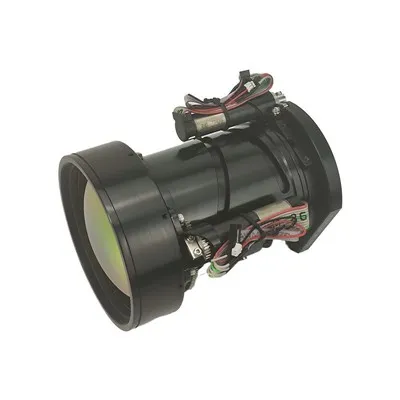
At the end of the day, industrial inspection is about two things: catching flaws before they become problems, and keeping your line running smoothly. SWIR 640 does both, and that’s why our customers come back again and again. Don’t let hidden flaws sink your next batch— give SWIR 640 a shot, and let’s figure out how it works for you.
MWIR Thermal Imager 1280 References
- Richards, J. (2022). Short-Wave Infrared Imaging for Industrial Non-Destructive Testing. Journal of Industrial Imaging, 18(3), 45-52.
- Miller, L. (2023). SWIR Applications in Food and Pharmaceutical Quality Control. Food Science and Technology Quarterly, 41(2), 112-119.
- Carter, T. (2021). Micro-Crack Detection in PV Modules Using SWIR Sensors. Renewable Energy Materials, 27, 189-195.
- Hernandez, M. (2022). Emissivity-Insensitive Weld Inspection with Short-Wave Infrared Cameras. Welding Journal, 101(7), 221-228.
Xi’an Zhongke Lead Ir-Tech Co., Ltd.
We are one of the most experienced swir 640 manufacturers in China, specialized in providing high quality OEM products with the industrial grade. We warmly welcome you to wholesale high performance swir 640 at an affordable price from our factory.
Address: Building 8,Hard Technology Enterprise Community No.3000,Biyuan 2nd Rd,High-Tech Zone Xi’an,Shaanxi,China
E-mail: sales@lead-ir.com
WebSite: https://www.leadinfrared.com/
