Hey everyone! If you’ve been around composting, especially with industrial fermentation equipment, you’ve probably asked this question at some point: “What’s the warranty period for fermentation compost equipment?” As someone who’s been selling and supporting these machines for the last 8 years, I get it—warranties feel like a big, vague box that either works for you or wastes your money. No one wants to drop tens of thousands on a compost turner or fermentation tank only to get stuck fixing something three months later. Let me break this down like I would for a client who just called me panicking about their new setup. Fermentation Compost Equipment
First off, let’s get one thing straight: there’s no one-size-fits-all number here. I’ve seen warranties that last 6 months, and ones that go all the way up to 3 years. But why the big difference? It all boils down to two huge factors: what the machine is actually made of, and how you’re using it. Let’s start with the equipment type because that’s the biggest divide.
If you’re talking about the small, batch-style fermentation compost bins—like the kind a small farm or community garden might use—most of those come with a 12-month warranty. Wait, no, wait—actually, some of the cheap imported ones are only 90 days. That’s a red flag right there. The domestic-made (or well-constructed) small bins? Yeah, 12 months. Why? They don’t have a lot of moving parts. Just a few mixing paddles, a small motor, and a temperature sensor. Not much can go wrong, so manufacturers feel confident giving a year.
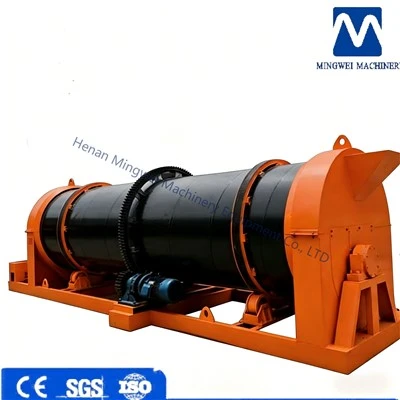
Now, if you’re dealing with the big industrial stuff—like continuous fermentation turners, static aeration tanks, or closed-loop composting systems—those are a whole different ballgame. The industrial ones I sell have a 24-month warranty on parts, and 12 months on labor. Wait, but why is that longer? Because those machines are built to run 12+ hours a day, 5 or 6 days a week. They have heavy-duty gearboxes, large drive motors, ventilation systems with fans, sensors that track moisture and temperature 24/7, and maybe even a control panel with a PLC. Those parts take way more abuse than a small backyard bin, so a good manufacturer knows they can stand behind them for two years. But here’s the catch: that’s only if you install them right and use them as intended.
Speaking of use—wait, that’s the second big factor. I had a client last year who bought our industrial turner, tried to use it to process 10x more organic waste than it was rated for, and then called me saying the warranty was void because the motor burned out. Duh. The warranty doesn’t cover misuse. If you’re running equipment beyond its capacity, modifying it without our approval, or skipping regular maintenance (like lubricating the gearbox every 3 months, or cleaning the ventilation filters), the warranty goes out the window. That’s not us being strict—that’s how all heavy machinery works. I tell every new client this on the first call: read the fine print. The warranty’s only good if you follow the operational guidelines.
Let me also talk about what the warranty actually covers, because that’s way more important than the length. A lot of people ask, “2-year warranty—what does that mean for me?” For our equipment, it covers all defective parts. So if a gearbox seal leaks out of nowhere, or a temperature sensor dies without you dropping it, or the drive motor fails because of a manufacturing defect, we ship the replacement part for free, no questions. The labor part (if you use our certified tech to install it or do repairs) is free for the first 12 months. After that, parts are still discounted, labor is just standard rate. But wear and tear? That’s not covered. So if a mixing paddle wears down because you’re composting really gritty, woody waste, or a belt slips and stretches because you didn’t adjust it, that’s on you. That makes sense, right? Those are normal things that happen with use, not manufacturing flaws.
Wait, also—there’s this thing called an extended warranty. I don’t push it on everyone, but if you’re a larger operation that runs 24/7, it’s worth looking into. We offer an optional 1-year extended warranty for industrial equipment, which adds another 12 months of parts coverage, and covers labor for another 6 months after the standard warranty ends. It’s a little extra cost, but when you’re paying for a team of techs to fix a machine that’s down and costing you money every day, it’s a no-brainer for a lot of folks. I had a food processing client last year who took the extended warranty, and when their ventilation fan died at 25 months, we sent the part in 2 days, no charge. If they hadn’t had it, they would’ve waited a week for the part, lost 10 tons of waste that couldn’t be processed on time, and paid thousands in emergency labor.
Now, let’s get into the common mistakes people make when it comes to compost equipment warranties. First, assuming all warranties are the same. A cheap machine from a no-name online seller might have a 90-day warranty, which is basically a “we’ll fix it if it breaks immediately” deal. That’s not enough for any compost operation, especially if you’re processing waste regularly. Second, not registering your equipment. A lot of people forget to fill out the warranty card or register online, and then when something breaks, the manufacturer says they have no record of your purchase. I always remind clients to register within the first 30 days of installation—takes 2 minutes, and saves you so much headache later. Third, not keeping maintenance records. Some manufacturers will ask for proof that you did regular checks, and if you don’t have it, they might deny a claim. I tell all my clients to keep a simple log: date, maintenance done, who did it. It’s not a big deal, but it makes the warranty claim process way smoother.
Wait, let’s talk about a recent example that stuck with me. A small organic farm bought a batch fermentation bin from me 18 months ago. They called last month saying the temperature sensor was giving wrong readings, so the compost was overheating and starting to smell. I had our tech go out there, and turns out, they had installed the bin in a spot that got direct sunlight all day, and didn’t insulate the sensor. That was misuse, right? But instead of brushing them off, we sent a new, weather-sealed sensor for half price, and gave them a free guide on sensor placement. Even though technically the warranty didn’t cover it, we’re a local supplier, so we don’t want to lose a client over a small mistake. That’s another thing to consider: who you’re buying from. A big national brand might hide behind the fine print, but a local or mid-sized supplier that actually knows compost will work with you if it’s a simple, avoidable error.
So, to sum up, what’s the average warranty period for fermentation compost equipment? For small, home or small-farm use: 90 days to 12 months. For medium operations: 18 months. For industrial, high-capacity setups: 24 months on parts, 12 on labor. Add an extended warranty if you want extra peace of mind. But again, it’s not just the length—it’s what’s covered, and how the supplier supports you.
Here’s the thing: if you’re in the market for this equipment, don’t just ask “what’s the warranty?” Dig deeper. Ask: “What parts are covered?” “Is labor included?” “What counts as misuse?” “Do you offer extended options?” “How do I file a claim if something breaks?” A good supplier will answer all those questions without making you feel like you’re bothering them. I always tell potential clients that the warranty is only as good as the supplier behind it. A 3-year warranty from someone who won’t return your calls after you buy is worthless. A 2-year warranty from someone who shows up within 24 hours if you have a problem? That’s gold.
Screener Machine Series If you’re shopping around right now, or have a machine that’s about to hit its warranty period, and you want to make sure you’re covered, feel free to reach out. I don’t do sales pitches here, but I know how frustrating it is to deal with a broken compost machine when you’ve got tons of organic waste waiting to be processed. Whether you’re a small garden or a big food processing plant, I can walk you through what warranty options make sense, or answer any questions about our equipment’s coverage. Just get in touch when you’re ready to chat—no pressure, no fine print traps.
References
- US Environmental Protection Agency. (2022). Composting Equipment Selection and Maintenance Guidelines. EPA Office of Sustainable Communities.
- International Organization for Standardization. (2021). ISO 14855-2: Determination of the ultimate aerobic biodegradability of plastic materials under controlled composting conditions – Part 2: Gravimetric method for samples recovered from compost.
- National Organic Farmers Association. (2023). Guide to Warranties for Agricultural Compost Equipment. NOFA Publications.
- Industrial Machinery Association. (2022). Standard Warranty Terms for Organic Waste Processing Equipment. IMA Technical Report Series.
Henan Mingwei Machinery Equipment Co., Ltd.
As one of the most experienced fermentation compost equipment manufacturers in China, we have world-leading production equipment and strong manufacturing capabilities. Please rest assured to buy durable fermentation compost equipment for sale here from our factory. For price consultation, contact us.
Address: No.461 Qudong Jinsui Avenue, Hongqi District, Xinxiang City, Henan Province, China
E-mail: info@hnmwm.com
WebSite: https://www.hnmwmequip.com/
