As a supplier of circular saw machines, I’ve encountered numerous inquiries from customers about the differences between circular saw machines and band saws. These two types of saws are widely used in woodworking, metalworking, and other industries, but they have distinct features and applications. In this blog, I’ll delve into the key differences between circular saw machines and band saws to help you make an informed decision when choosing the right tool for your project. Circular Saw Machine
1. Structure and Design
Circular saw machines are characterized by a circular blade that rotates at high speed. The blade is typically mounted on an arbor and driven by an electric motor. The saw can be handheld or table – mounted. Handheld circular saws are portable and convenient for on – site cutting, while table – mounted circular saws offer more stability and precision for larger projects.
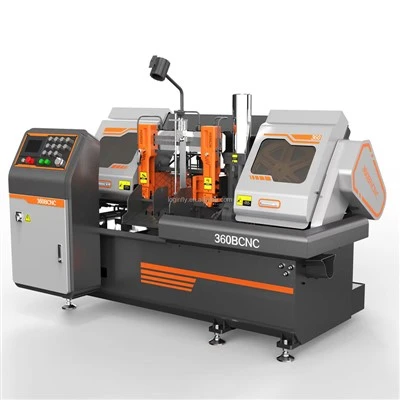
On the other hand, band saws use a continuous band of toothed metal that runs around two or more wheels. The band is tensioned to keep it in place and is powered by an electric motor. Band saws can be vertical or horizontal. Vertical band saws are commonly used for cutting curves and irregular shapes, while horizontal band saws are often used for cutting large pieces of metal or wood in a straight line.
The structural difference between the two has a significant impact on their performance. The circular saw’s rotating blade allows for fast, straight cuts, but it may struggle with complex curves. The band saw’s continuous band, however, can easily follow curves and contours, making it ideal for detailed work.
2. Cutting Capabilities
Cutting Speed
Circular saw machines are known for their high cutting speed. The circular blade rotates at a very high RPM (revolutions per minute), which enables it to quickly slice through materials. This makes circular saws suitable for projects that require rapid cutting, such as framing in construction or cutting large sheets of plywood.
Band saws, while not as fast as circular saws in straight – line cutting, offer a more consistent cutting speed. The continuous band moves at a relatively constant rate, which is beneficial for cutting materials that require a steady hand, like delicate woodwork or thin metal sheets.
Cutting Thickness and Width
Circular saws can cut through a wide range of material thicknesses. The depth of cut is determined by the diameter of the blade and the saw’s design. Larger – diameter blades can cut deeper, but they also require more power. In terms of width, circular saws are limited by the size of the blade and the saw’s base. They are best suited for cutting relatively narrow pieces.
Band saws, on the other hand, can handle a greater variety of thicknesses and widths. The width of the band and the size of the saw’s throat (the distance from the blade to the frame) determine the maximum width of the material that can be cut. Band saws can cut thick materials, and some industrial – grade band saws can handle very large workpieces.
Cutting Accuracy
Circular saws can provide accurate straight cuts, especially when used with a guide or a fence. However, they may not be as precise when cutting curves or bevels. The rotating blade can cause some vibration, which may affect the accuracy of the cut.
Band saws are renowned for their cutting accuracy, especially when it comes to curves and irregular shapes. The continuous band allows for smooth, precise cuts, and the saw can be adjusted to make very fine cuts. Band saws also offer better control over the cutting process, which is essential for high – precision work.
3. Safety Features
Blade Protection
Circular saw machines are equipped with blade guards to protect the user from the rotating blade. The guard covers most of the blade, except for the part that is in contact with the material being cut. However, the guard can sometimes interfere with the cutting process, and users may be tempted to remove it, which increases the risk of injury.
Band saws also have blade guards, but they are designed differently. The band is enclosed in a housing for most of its length, reducing the risk of accidental contact. The guards on band saws are generally more reliable and less likely to be removed during normal use.
Kickback Prevention
Kickback is a serious safety concern with circular saws. When the blade binds in the material, it can suddenly jerk the saw back towards the user. To prevent kickback, circular saws are equipped with anti – kickback pawls and riving knives. These features help to keep the blade from binding and reduce the risk of kickback.
Band saws have a lower risk of kickback compared to circular saws. The continuous band moves in a single direction, and the design of the saw makes it less likely for the blade to bind. However, proper safety procedures, such as using a push stick when cutting small pieces, are still necessary.
4. Applications
Woodworking
In woodworking, circular saws are commonly used for rough cutting, such as cutting lumber to length or ripping large sheets of plywood. They are also useful for making cross – cuts and bevel cuts. Circular saws are often the tool of choice for construction projects where speed is important.
Band saws are more suitable for detailed woodworking, such as cutting dovetail joints, making curved cuts, and resawing lumber. They can also be used for cutting small pieces of wood with high precision.
Metalworking
Circular saws can be used for cutting metal, but they are typically limited to thin sheets or small pieces. Specialized circular saw blades made of carbide or diamond are required for cutting metal.
Band saws are the preferred tool for metalworking, especially for cutting large pieces of metal. They can cut through various types of metal, including steel, aluminum, and brass. Band saws can make straight cuts, as well as cuts at different angles, and are commonly used in metal fabrication shops.
5. Cost and Maintenance
Cost
Circular saw machines are generally more affordable than band saws, especially for entry – level models. Handheld circular saws are relatively inexpensive and are a popular choice for DIYers and small – scale projects. Table – mounted circular saws can be more expensive, but they offer greater precision and versatility.
Band saws tend to be more costly, especially industrial – grade models. The cost of a band saw depends on its size, features, and cutting capacity. However, the investment in a band saw can be worthwhile for professional woodworkers or metalworkers who require high – precision cutting.
Maintenance
Circular saws require regular maintenance to ensure optimal performance. The blade needs to be sharpened or replaced regularly, and the saw’s motor and bearings need to be lubricated. The saw’s base and guide need to be kept clean and adjusted to maintain accuracy.
Band saws also require maintenance, but the process is slightly different. The band needs to be tensioned correctly, and the wheels need to be aligned. The blade may need to be sharpened or replaced, and the saw’s bearings and drive system need to be lubricated. Overall, the maintenance of a band saw can be more complex than that of a circular saw.
Conclusion

In conclusion, both circular saw machines and band saws have their own unique advantages and disadvantages. Circular saws are fast, versatile, and relatively affordable, making them a great choice for general cutting tasks and projects where speed is crucial. Band saws, on the other hand, offer superior cutting accuracy, especially for curves and irregular shapes, and are well – suited for detailed work in woodworking and metalworking.
Vertical Band Saw Series As a supplier of circular saw machines, I understand the importance of choosing the right tool for your specific needs. If you’re looking for a reliable and efficient circular saw machine for your project, I’d be more than happy to assist you. Whether you’re a DIY enthusiast or a professional tradesperson, I can provide you with high – quality circular saw machines that meet your requirements. Contact me to discuss your needs and start a procurement negotiation.
References
- "Woodworking Machinery Handbook" by Tom Begnal
- "Metalworking Technology" by David A. Bickford
- Industry – specific trade magazines and journals related to woodworking and metalworking.
Shanghai Loginfly Sawing Technology Co., Ltd.
As one of the most professional circular saw machine manufacturers and suppliers in China, our products have good reputation in the market. We warmly welcome you to wholesale premium circular saw machine from our factory. If you have any enquiry about cooperation, please feel free to email us.
Address: Room 506 NO.655 Yinxiang Road,Nanxiangtown,Jiading District, Shanghai.China
E-mail: sales01@loginfly.com
WebSite: https://www.loginflysaws.com/
