Hey everyone, it’s Sam from your go-to jaw plates supplier, and let’s cut to the chase—if you’re running a crusher, mining operation, demolition crew, or even a recycling yard, you know jaw plates are the unsung workhorses of your whole setup. They take the brunt of the impact, the constant abrasion from rock, concrete, metal chunks, whatever you’re cranking through, and skip proper maintenance, and you’re looking at unplanned downtime, blown budgets, and maybe even a whole crusher overhaul you didn’t see coming. I’ve been in this game for over 12 years now, working side by side with operators on job sites in every kind of weather, and I’ve seen it all: guys who run their plates into the ground and then wonder why replacement orders hit them out of nowhere, and guys who nail the small, consistent habits and stretch their plates twice as long. Today I’m breaking down exactly how to keep your jaw plates performing, without the fancy, overcomplicated jargon that no one actually uses on a Tuesday morning when they’re staring at a dusty crusher control panel. Jaw Plates
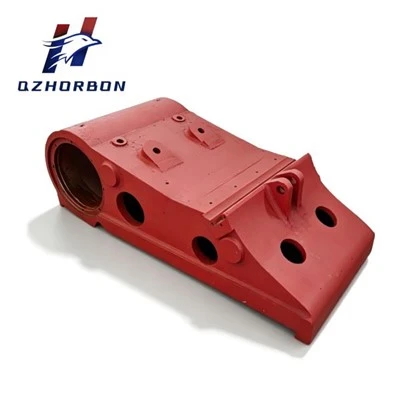
First off, let’s get one thing straight: your jaw plates don’t need fancy labs or a PhD to maintain—they need routine checks that take 10 minutes tops, not a 2-hour deep dive. The first, non-negotiable step is daily pre-start checks. I know, I know, “pre-start checks” sounds like corporate buzzkill, but hear me out. Before you fire up the crusher for the first shift, pop the access panel and take a 60-second look at both the stationary (the fixed one bolted to the crusher frame) and swing (the one that moves back and forth) jaw plates. You’re not looking for perfection—you’re looking for red flags that turn into big problems if you ignore ‘em. Start at the top and work your way down, because that’s where most initial wear happens. Rock and debris shift as the crusher cycles, so the leading edge (the top 2 inches of the plate) takes the first hit every single time it closes. If you spot small chips or cracks there, don’t brush it off—wait 3 shifts and that chip’ll turn into a 2-inch crack running the whole side of the plate.
Next, check for loose bolts. This is the #1 mistake I see new operators make. The constant vibration from the crusher running 10+ hours a day works bolts loose, and before you know it, a whole section of jaw plate shifts, wears unevenly, and causes more damage than you’d believe. My rule is: check bolt torque every shift change, not just once a week. And pro tip from the job site—don’t use a random socket wrench. Get a torque wrench calibrated every 6 months; over-tightening is just as bad as under-tightening, because it can warp the plate’s mounting surface and make it wear unevenly. You’d be shocked how many guys I’ve seen blow a plate because they cranked bolts so hard they bent the whole thing.
Now, the big one—proper feed material management. This isn’t just “don’t feed the crusher lawn chairs” (though I’ve definitely seen that too). The #2 cause of premature jaw plate failure is feeding the wrong stuff, or feeding it wrong. Let’s be real, most of us have to crush whatever comes through the yard, but there’s a line. First, remove oversized material before it hits the jaws. I can’t tell you how many times a 3-foot boulder or a chunk of rebar-pierced concrete gets dumped straight into the crusher feed, and it doesn’t just jam the whole machine—it slams into the jaw plate like a punch, causing immediate chips and stress fractures that you won’t see until the plate is halfway ruined. If you can’t put a grid screen before the crusher (I highly recommend adding one—costs less than one replacement plate, trust me), then assign a guy to do a quick pass with a magnet and a metal bar to yank out any rebar, metal scraps, or oversized chunks before they go in. That single step can add 20% to the life of your jaw plates, easy.
Also, how you load the crusher matters a lot. Don’t feed the jaw all at once in one big pile in the center. Spread the feed evenly across the whole length of the jaws, so both sides wear at the same rate. If you dump all the material on the left side, that left jaw will wear down twice as fast as the right, and you’ll end up replacing one plate when you should be replacing two. I’ve seen guys run a crusher for 6 months with uneven wear and wonder why their product output is all lopsided—9 times out of 10 it’s uneven jaw loading. And for operations that crush abrasive stuff like granite or basalt? Slow down the feed rate a little. Cranking the feed too fast means the jaws are scraping material across each other instead of crushing it, which turns abrasive wear into something way worse.
Let’s talk about regular inspections, beyond the daily pre-start. Every 50 to 100 operating hours—so roughly once a week, depending on how many shifts you run—do a deeper dive. Take the access panels off, pull the plates if you can (or at least get a good look at the back side and the mounting surface) and measure the wear. How do you measure it, you ask? Most plates come with wear marks, little cast-in lines that tell you how much material is left. If those lines are worn down completely, it’s time to start planning a replacement, not panicking. The worst thing you can do is wait until the plate is paper-thin—if it cracks or breaks while you’re running, you’re looking at a full crusher teardown, which can take 12+ hours, vs. a 1-hour plate swap when you’re scheduled for a break.
Uneven wear is another big one here. If one side of the jaw plate is wearing more than the other, that’s a sign something’s off—could be loose bolts, could be uneven feed, could be a bent eccentric shaft in the crusher. Catching that early lets you fix it before it ruins a whole pair of plates. I always tell customers to keep a spare set of top-quality jaw plates on hand. Yeah, it’s an upfront cost, but it beats waiting 3 days for a replacement to show up and losing a week of production because your crusher is down. Trust me, I’ve had customers call me at 2 a.m. panicking because their plate broke on a weekend, and we got them a same-day delivery, but it’s way better to plan ahead.
Now, let’s get into something I don’t hear enough guys talking about: plate rotation. Wait, rotation? Yeah, a lot of jaw plates are designed to be flipped or rotated so you use a different edge, doubling their lifespan. Most stationary jaw plates can be rotated 180 degrees, and a lot of swing plates can be flipped too. Why? Because the opposite edge of the plate takes different amounts of wear. If you’re only using the top edge for 8 hours a day, flipping the plate so the bottom edge (which gets less use) becomes the new top, you’re spreading that wear out evenly. I’ve seen guys do this and get an extra 2-3 months out of a single pair of plates, no extra cost, just 15 minutes of labor. Just make sure when you rotate, you torque the bolts to the exact specs the manufacturer recommends—don’t guess, get the manual or hit me up, I’ll send it over no charge.
What about material type? That’s a big one, because not all jaw plates are the same, and maintaining them starts with picking the right one for your feed, but that’s only half the battle. If you’re crushing soft, non-abrasive stuff like limestone or brick, you can run them a little harder, but if you’re crushing super abrasive stuff like granite or quartzite, you need to adjust your maintenance schedule—inspect every 50 hours instead of 100, and maybe check for wear more often. Also, heat is a thing. If you’re running a crusher in 100-degree weather, the metal of the jaw plate expands a little, which can change how the bolts hold them. I’ve had a customer in Arizona find that his bolts were loosening 2x faster in summer heat, so he adjusted his weekly check to every 3 days, and that fixed it. It’s the small, job-site-specific tweaks that make all the difference.
Let’s talk about common mistakes I see all the time that people don’t realize are killing their jaw plates. First, washing the jaw plates with high-pressure water? Wait, why would you do that? Well, some guys think it’s easy to blast off dust and debris, but high pressure can force water into the gaps between the plate and the crusher frame, which causes rust, and rust makes the plate expand unevenly, leading to stress cracks. If you need to clean around the plates, use a brush or a low-pressure hose, no high-pressure power washers. Second, not cleaning the crusher throat after a long run. At the end of every shift, knock out any leftover material from the jaws—if you leave rock or concrete sitting in the throat overnight, it can shift, freeze (if it’s cold out), and put constant pressure on the jaw plates when you start up the next day, leading to cracks. I had a customer in Montana have a jaw plate crack because leftover concrete froze in the throat during winter break, and he didn’t think to check it before starting up. That’s a $2,000 mistake that could’ve been avoided with a 5-minute cleanout.
Another big one: when you do replace jaw plates, don’t cut corners on the swap. Take your time, line the plates up perfectly, use new bolts (don’t reuse old ones—they stretch over time, which can lead to uneven torque), and get the torque right. Rushing a plate swap means bad fit, uneven wear, and short plate life. I always tell my customers: if you don’t have time to do it right, wait until you do. It’s better to lose an hour than a week of production because you cut corners.
Wait, let’s address a question I get all the time: how do I know when it’s time to replace, vs. just rotate or adjust? If the wear is still uniform, and the cast-in wear lines are just gone, that’s rotation territory. If there’s a chip deeper than a quarter-inch, or a crack longer than an inch, that’s a replacement, not a fix. Small chips are fine, but cracks spread fast—especially in heavy equipment. I’d rather sell you a new plate than have you call me at 3 a.m. when your whole crusher is down because a cracked plate broke apart.
Now, let’s wrap this up with the most important takeaway: jaw plate maintenance isn’t a one-time chore, it’s a consistent, small routine that adds up to big savings. You don’t need to invest in fancy tools or a full-time maintenance guy—just a 10-minute daily check, a weekly deep dive, rotating plates when you can, watching what you feed, and fixing small issues before they become big ones. I’ve worked with hundreds of operators over the years, and the guys who follow these steps are the ones who get the most out of their jaw plates, who don’t have unexpected downtime, and who save thousands of dollars a year on replacement parts.
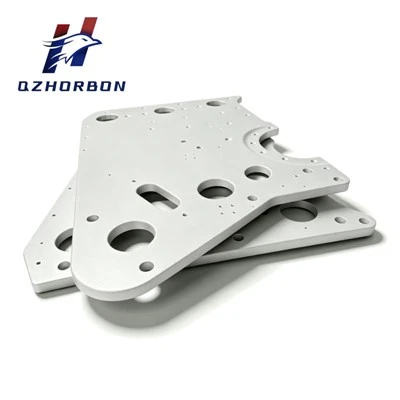
If you’re struggling with jaw plate wear, if you’re tired of replacing them every 2 months, or if you just want to stock up on high-quality plates and get a custom maintenance plan for your specific crusher, hit me up. I don’t do the generic sales fluff— I’ll ask you what you’re crushing, how many hours you run, what’s your current setup, and give you specific tips that work for your job. No fine print, no hidden fees, just straight talk about keeping your crusher running strong.
Crusher Frame References: 1. Mining and Crushing Equipment Maintenance Handbook, National Stone, Sand & Gravel Association, 2021. 2. Wear Parts Best Practices for Aggregate Operations, American Society of Mechanical Engineers, 2019. 3. Crusher Jaw Plate Performance Guidelines, International Association of Demolition Contractors, 2022.
Quzhou Horbon Mining Parts Co., Ltd.
Address: No.8 Nanshan Road, Qujiang District, Quzhou City, Zhejiang Province, China
E-mail: horbonmining@gmail.com
WebSite: https://www.horbonmachinery.com/
