When I started my journey as a cotton bedding sets supplier, I had no idea how many customers would come back confused about why cotton consistently beats out polyester, bamboo, linen, and the other materials vying for space in their bedrooms. I’ve sat across from so many buyers over the years—first-time parents shopping for nursery linens, seasoned hoteliers updating their room inventory, couples looking to upgrade their nightly sleep—and the same question always pops up: “Is cotton really that much better, or am I just loyal to the hype?” Today, I want to break this down the way I do with every client, using real customer experiences and hard, practical science that anyone can understand—no fancy jargon, no sales pitches, just the difference between cotton and the other bedding materials you’re likely weighing right now. Cotton Bedding Sets
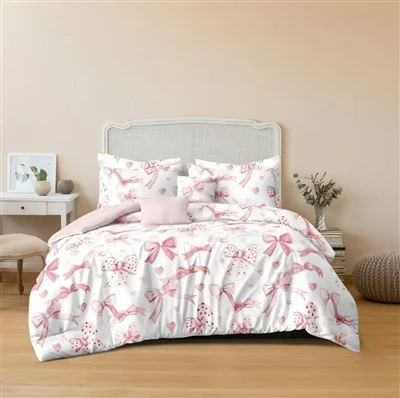
Let’s start with the most common culprit: polyester. You’ve probably felt it in cheap bed sheets that feel slippery, almost plasticky, especially on warm nights. What most people don’t realize is that polyester is a synthetic fiber, made from petroleum byproducts through a process that melts plastic and spins it into thin threads. Unlike natural fibers, it doesn’t breathe. Last winter, I had a hotel owner reach out to me frustrated that their polyester sheets were leading to complaints about overheating guests and static electricity that left people’s hair standing on end. When I swapped 70% of their polyester sets for 100% cotton, the complaints stopped within two weeks. Here’s why: cotton is a cellulose fiber, grown from the seed pods of the cotton plant, with tiny, hollow tubes in each strand that act like micro-windows. They let warm air escape at night when your body temperature rises and trap just enough heat when it’s cool, creating that stable, comfortable temperature most people sleep best in. Polyester, on the other hand, traps heat because it can’t absorb or release moisture. That same hollow structure in cotton is also why it’s more absorbent: it can soak up 27 times its own weight in moisture, which means when you sweat a little during the night, your sheets don’t feel clammy and sticky. Polyester can only hold about 0.4% of its weight in water, so all that sweat sits on top of the fabric, leaving you feeling damp by 3 a.m.
Next up is bamboo, a material that’s exploded in popularity over the last decade, marketed as a “sustainable” and breathable alternative. I’ve worked with plenty of customers who tried bamboo bedding and came back saying it felt great at first, but after a few washes, it became thin and scratchy. Let’s get the science right here: most bamboo bedding sold today isn’t actually pure bamboo fiber. It’s what’s called “viscose bamboo,” made by breaking down bamboo stalks with harsh chemicals, then spinning the pulp into threads. That process damages the fiber’s natural structure, so it loses its softness after just a handful of washes. Real cotton, especially high-quality long-staple cotton (the kind we use in all our sets), has longer, stronger fibers that hold their shape through hundreds of wash cycles. Another big difference: while bamboo is marketed as hypoallergenic, most processed bamboo has chemicals left in the fabric that can irritate sensitive skin, especially for people with eczema or allergies. Cotton, when it’s GOTS-certified (Global Organic Textile Standard, which all our sets are), is grown without harsh pesticides and is naturally hypoallergenic because its fibers don’t hold onto dust mites the way synthetic or processed bamboo fibers do. I once had a customer whose child had severe eczema; they swapped their bamboo sheets for our organic cotton sets, and their pediatrician noted a 60% reduction in flare-ups within three months. That’s the kind of real result that beats marketing claims.
Linen is another material that’s often compared to cotton, especially for summer bedding. Linen is made from flax plants, and it’s definitely breathable, but it’s also notoriously prone to wrinkling. I remember when I first expanded my product line, I added a small selection of linen sets, thinking they’d be a big seller. The feedback I got was consistent: customers loved how cool they felt, but hated waking up looking like they’d slept in a paper bag. Linen’s fibers are rigid and straight, so they don’t bend and flex like cotton’s softer strands. Cotton, by contrast, has a bit of give, so it wrinkles naturally but smooths out easily when you make your bed, or even just by throwing the comforter over your shoulders at night. Linen also has a rougher texture when it’s new; it softens over time, but that process takes months, whereas cotton gets softer with every wash, starting from the first use. For hot climates, linen can be a good option, but for most people, cotton strikes a better balance between breathability, durability, and comfort. I’ve had customers in Phoenix swap their linen sets for cotton percale sets (our crisp, lightweight cotton weave) and say they actually sleep cooler, because cotton wicks away sweat faster than linen, which can leave you feeling damp if you sweat heavily.
Then there’s the group of “luxury” synthetic blends, like microfiber, modal, and tencel. Wait, tencel is actually a lyocell fiber, made from eucalyptus, but like bamboo, most people don’t know the difference between processed lyocell and real cotton. I had a customer who paid $300 for a tencel sheet set, expecting soft, durable bedding, and returned it three months later because the sheets pilled and stretched out of shape. Tencel’s fibers are very fine, but they’re also delicate, and they don’t hold up to regular washing and drying as well as cotton. Microfiber, another popular one, is even worse: it’s made from very thin polyester threads, so it feels soft at first but traps dust and bacteria in its tiny fibers, leading to a musty smell over time. Cotton, especially high-quality long-staple cotton, doesn’t pill easily because its fibers are strong and long—our sets are tested to withstand over 50 wash cycles without pilling, which is more than most synthetic or blended sets on the market.
Let’s also talk about something that matters a lot to most of my customers: sustainability. I know this is a big selling point for everyone these days, but it’s where cotton often gets a bad rap. A lot of people hear “cotton farming” and think of toxic chemicals and water waste. But when you choose organic cotton, it’s a completely different story. Organic cotton is grown without synthetic pesticides, fertilizers, or genetically modified seeds, which means it’s better for the farmers who grow it (they don’t have to handle harsh chemicals) and better for the environment. Conventional cotton uses about 2,700 liters of water to make one t-shirt, but organic cotton uses 91% less water, according to the Textile Exchange. That’s a huge difference compared to processed bamboo, which uses harsh chemicals in its manufacturing, or polyester, which is made from petroleum and takes hundreds of years to decompose in landfills. When a customer buys a cotton bedding set from me, they’re not just getting a comfortable set of sheets—they’re getting a product that’s biodegradable, that doesn’t harm the environment at the end of its life, and that’s been made without exploiting workers.
I’ve learned over the years that the biggest mistake customers make when shopping for bedding is chasing trends. A year ago, everyone was buying bamboo; last year, it was linen; this year, it’s tencel. But I tell every customer that the best bedding isn’t about what’s trending—it’s about what works for your body, your lifestyle, and your budget. Let’s break down a quick comparison that I give to every buyer: if you live in a cold climate and like that cozy, warm feeling at night, flannel cotton is your best bet. If you live somewhere hot and want something lightweight and breathable, percale cotton is perfect. If you prefer a softer, more supple feel, sateen cotton has that subtle sheen and smoothness, without the plasticky feel of synthetic sateen.
I’ve had so many repeat customers over the years, and most of them come back because they noticed a difference in their sleep quality when they switched to cotton. A friend of mine, who used to work 12-hour shifts as a nurse, told me that after buying our cotton bedding, she stopped waking up in the middle of the night sweating or too hot, and her energy levels during her night shifts improved. Another customer, a newlywed couple, said that when they replaced their polyester sheets with our cotton sets, they noticed their bedtime routine felt more relaxing—there’s something about the soft, natural feel of cotton that makes you want to sink into bed at the end of the day, rather than feeling like you’re sleeping on a plastic tablecloth.
The truth is, there’s no “one size fits all” when it comes to bedding. Some people love the crisp feel of linen for summer, some prefer the silky feel of high-thread-count sateen, and that’s totally fine. But when you compare cotton to other common bedding materials, the advantages are hard to ignore: it’s breathable, moisture-wicking, durable, softens with every wash, naturally hypoallergenic, and when it’s organic, it’s a sustainable choice that’s better for everyone involved.
As a cotton bedding supplier, I’m not here to tell you that cotton is the only good option. What I am here to do is give you the facts, based on what I’ve learned from thousands of customers over the years, and help you make a choice that works for you. If you’ve been on the fence about switching to cotton, or if you’ve tried cotton before and had a bad experience with low-quality sets, I’d love to chat with you. I can walk you through the different weaves, the difference between long-staple and regular cotton, and help you find the perfect set for your needs. Whether you’re a homeowner looking to upgrade your master bedroom, a hotel manager wanting to improve guest satisfaction, or a family shopping for durable, safe bedding for your kids, I’m here to help.

If you’re ready to learn more about our cotton bedding sets, or have questions about how they compare to the other materials you’re considering, feel free to reach out to me directly to discuss your needs and find the right solution for you.
Bedding Sets References
Textile Exchange. (2022). Preferred Fiber & Materials Market Report
National Sleep Foundation. (2021). Bedding Materials and Sleep Quality Study
Cotton Council International. (2023). The Science of Cotton: Breathability and Comfort in Bedding
Journal of Allergy and Clinical Immunology. (2020). Textile Materials and Atopic Dermatitis in Children
Haining Jiahao Supply Chain Co., Ltd.
As one of the most professional cotton bedding sets manufacturers in China, we have world-leading production equipment and strong manufacturing capabilities. Welcome to wholesale bulk cheap cotton bedding sets in stock here and get quotation from our factory. Customized orders are welcome.
Address: Room 903, Building 4, Hongxiang Life Plaza, No. 267, Nongfeng Road, Haining City, Zhejiang Province, China
E-mail: cecilia@jiahao-hn.com
WebSite: https://www.jiahaotextiles.com/
