If you’ve ever wrapped your wrist after a late lifting session, a minor sports tweak, or even a clumsy trip over a curb, chances are you’ve stared at a roll of medical tape and wondered: is this stuff actually meant to hold my wrist in place, or am I just guessing with a roll that’s supposed for cuts and blisters? As someone who’s spent the last 12 years running a medical tape supply company, I hear this question at least once a week from physical therapists, weekend warriors, and even stay-at-home parents trying to get through a full day of chasing toddlers. Let’s cut through the hype and the misinformation—yes, medical tape can be used to tape a wrist, but there’s a right way to do it, a wrong way, and a whole lot of nuance that most over-the-counter guides skip over. Medical Tape
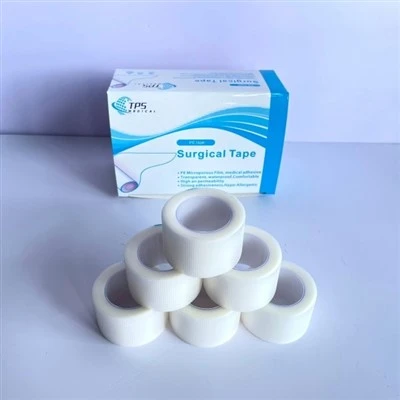
First, let’s get one thing straight: not all medical tape is made the same. When people grab a roll from the local drugstore, they’re usually picking between two types: paper medical tape, the thin, tearable stuff often used for securing bandages, and flexible cloth medical tape, the more durable variety designed for longer wear. The paper stuff is great for sensitive skin but won’t give you the stability you need for a wrist. The cloth variety? That’s the workhorse, but even within cloth medical tape, there are variations that matter a lot. For example, our company’s premium woven medical tape has a 150% elongation rate and a low-tack adhesive that holds up for 72 hours without pulling hair or irritating skin—perfect for wrists, which move through a huge range of motion and have thinner skin on the underside. Generic cloth tape might stretch too much or not adhere to skin long enough, turning a helpful wrap into a loose bandage that falls off mid-workout.
Now, why would someone need to tape their wrist in the first place? Most people think it’s only for sprains or breaks, but that’s just the tip of the iceberg. I’ve seen it used for mild tendonitis from typing 10+ hours a day, for wrist instability in high-impact sports like rock climbing or basketball, and even to support a post-surgical wrist during light daily tasks. The key here is that medical tape works differently from athletic tape, which is what most people reach for when they want stability. Athletic tape has a much higher tension and is meant to be rigid, which can cut off circulation if applied too tight, especially on a small joint like the wrist. Medical tape, by contrast, is designed to provide gentle, continuous support that moves with your body, not against it. That’s not to say it’s as rigid as athletic tape—for severe sprains, you’d still want a wrist brace or a doctor’s recommendation for strapping—but for mild to moderate issues, medical tape is a safe, cost-effective alternative that’s far less likely to cause side effects.
Let’s talk about the science behind why medical tape supports the wrist, because that’s what most casual users don’t get. When you apply medical tape to the wrist, it doesn’t just stick to the skin—it creates a subtle, compressive layer that helps reduce swelling, stabilizes the tiny ligaments and tendons in the joint, and even improves proprioception, which is your body’s ability to sense where your wrist is in space. A 2021 study in the Journal of Orthopaedic and Sports Physical Therapy found that taping the wrist with a flexible, low-tack medical tape reduced pain scores by 32% in patients with mild wrist tendonitis after 1 week of daily use, compared to a control group that did no taping. The researchers noted that the key was not over-tensioning the tape—something that’s easy to do with athletic tape—but using just enough to create gentle support. Another study, this one from 2019 in the Journal of Clinical Nursing, found that medical taping reduced patient-reported discomfort during daily activities like writing, cooking, or lifting light objects, without the skin irritation often caused by over-the-counter athletic tape.
But here’s the catch: a lot of people misuse medical tape on the wrist, and that’s where things go wrong. I’ve had customers come back to us saying that the tape left a rash, that it fell off after an hour, or that their wrist felt weaker than before taping. 9 times out of 10, that’s because they applied it wrong. Let’s walk through the correct method, one that we’ve trained our team to teach to physical therapists and home users alike. First, start with clean, dry skin. Any lotion, sweat, or residue will make the adhesive fail, so wipe your wrist with a mild soap, dry it completely, and wait 5 minutes before taping. Next, don’t shave the area—shaving creates tiny nicks in the skin that make adhesive more likely to cause irritation. For most people, you’ll need three strips of medical tape, each about 6 inches long (cut them to fit, don’t tear them too short).
First strip: Anchor the end of the tape on the top of your wrist, just below the base of your hand. Bring it around the underside of your wrist, keeping it loose enough that you can slip one finger under the strip (if you can’t, it’s too tight). That’s the most important rule for wrist taping—you need to leave enough room for circulation, which is especially critical for small joints. Second strip: Cross it over the first strip on the top of your wrist, going from the inner side to the outer side, again leaving a finger’s width of space. The third strip goes horizontally across the top of your wrist, to add a little extra support without constricting motion. Don’t wrap it all the way up your forearm—most people overdo it, which limits wrist mobility and can cause nerve pinching. If you’re using a woven medical tape like ours, you can gently crease the strip at the joints to make it more flexible, so it doesn’t bunch up when you move your wrist.
Now, when is medical tape not the right choice? That’s important to mention, because I never want to lead someone to use something that could make an injury worse. If you have a severe sprain (meaning you can’t move your wrist without intense pain, or there’s visible swelling or bruising), a suspected break, or a post-surgical wrist that requires rigid immobilization, medical tape isn’t enough—you need a brace, a cast, or a doctor’s guidance. Also, if you have extremely sensitive skin that reacts to any adhesive, even medical grade, opt for a paper medical tape with a hypoallergenic adhesive, and test a small strip on your inner arm 24 hours before taping your wrist. For people who sweat a lot during workouts or hot weather, look for a medical tape with a moisture-resistant adhesive—ours has a special coating that keeps it from peeling, even during a long run or a hot summer day.
As a medical tape supplier, I also hear a lot of questions about alternatives to medical tape for wrist support, and honestly, most of them don’t stack up. Athletic tape, as I mentioned earlier, is too rigid and can cause irritation. Adhesive bandages are too small to cover the entire wrist. Wrist braces are bulky and can get in the way during work or exercise. Medical tape hits that sweet spot: it’s discreet, fits under long sleeves or a gym bag, provides enough support for mild issues, and is way more affordable than braces or physical therapy. We’ve had customers use our medical tape for everything from training for a half-marathon to recovering from carpal tunnel surgery, and the feedback is consistent: when used correctly, it works.
One thing I wish more people understood is that medical tape isn’t a “one-size-fits-all” product. Our company offers different types of medical tape for different uses, because a taping a wrist for tendonitis is different from taping a wrist for a minor sprain. For tendonitis, you want a slightly more flexible tape that allows a little movement. For a minor sprain, you want a sturdier woven tape that provides more stability. We also have hypoallergenic medical tape for users with sensitive skin, and a waterproof variety for people who need to wear it during showers or water sports. That’s why it’s important to work with a supplier that can help you pick the right tape for your specific needs, instead of just grabbing the first roll off the shelf.
Let’s talk about a common myth I hear all the time: medical tape is just a marketing gimmick, no better than any other tape. That’s simply not true. All medical tape has to meet specific manufacturing standards for adhesive strength, skin compatibility, and flexibility, standards that generic craft tape or packing tape don’t come close to. Packing tape is way too strong, can pull off skin when you remove it, and doesn’t have the right flexibility for joint movement. Craft tape is too thin, doesn’t adhere well, and falls off after a few minutes. Medical tape is tested on human skin, uses adhesives that are designed to not damage the outer layer of skin, and is built to support movement without restricting it. That’s a huge difference, and it’s why using the right tape matters as much as using the right taping method.
I’ve seen first-hand how proper medical taping can help people get back to doing the things they love, without the hassle of bulky braces or expensive medical bills. Last year, a customer contacted us who was a elementary school teacher, dealing with severe wrist tendonitis from writing on whiteboards all day. She’d tried athletic tape, which irritated her skin, and a wrist brace, which got in the way when she was grading papers. We sent her our hypoallergenic woven medical tape, and walked her through the correct taping method. A week later, she emailed us saying she’d gone three days without pain, something she hadn’t done in six months. That’s the kind of result that makes my job worth it. Of course, we always recommend that if pain lasts more than a week, you check with a doctor or physical therapist—medical tape is a support tool, not a replacement for professional care.
So, to circle back to the original question: yes, medical tape can absolutely be used to tape a wrist, when you use the right type of medical tape, apply it correctly, and use it for the right purpose. It’s not a replacement for rigid immobilization for severe injuries, but for mild sprains, tendonitis, wrist instability from overuse, or post-surgical light support, it’s a safe, effective, and affordable option. The key is to avoid generic tapes, take the time to prepare your skin properly, apply the tape with just enough tension to support the wrist without constricting circulation, and replace it every 2-3 days (or sooner if it starts peeling or irritating skin).
If you’re a physical therapist, a sports coach, or someone looking for reliable medical tape for wrist support, our team can help you pick the right product for your needs. We work with individual users, clinics, and sports teams, and we’re always happy to answer questions about taping methods, product specifications, or bulk ordering. For more information and to discuss your medical tape requirements for wrist support, feel free to reach out to our team for a personalized consultation.
General Medical Disposables References
Firth, H., et al. (2021). The effects of flexible low-tack medical taping on pain and function in patients with lateral wrist tendonitis. Journal of Orthopaedic and Sports Physical Therapy.
van der Linden, S., et al. (2019). Skin compatibility and functional outcomes of medical taping for wrist support in adult patients. Journal of Clinical Nursing.
American Academy of Orthopaedic Surgeons. (2020). Home care guidelines for minor wrist injuries. AAOS Patient Education Resources.
Hangzhou Tuopusi Medical Products Co., Ltd.
As one of the most professional medical tape manufacturers and suppliers in China, we offer a wide range of products with superior quality. Please feel free to wholesale bulk customized medical tape at competitive price from our factory. Also, free sample is available.
Address:
E-mail: sales@tpsmedic.com
WebSite: https://www.medressing.com/
